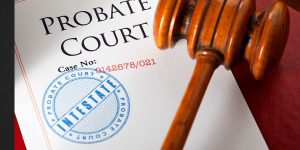
When a Brooklyn family loses a parent who owned a Park Slope brownstone exclusively in his own name, the next nine to twelve months belong to Surrogate’s Court. The surviving family cannot sell the property. They cannot refinance the mortgage. They cannot even legally collect rent from the garden-level tenants. This absolute administrative freeze is the direct, unavoidable result of how the deed was titled. In real estate law, this sole ownership structure is known as property held in severalty. While it offers total control during your lifetime, it guarantees a court-supervised probate process after your death.
The Illusion of Independence
I regularly review deeds for incoming clients who proudly note that their name—and only their name—is on the title. They view this as the ultimate financial independence. As the sole owner, they are the undisputed decision-maker. There are no co-owners to consult, no joint tenants to argue with over renovations, and no need to seek permission before securing a home equity line of credit. Stewardship of the asset rests entirely on their shoulders.
But this independence has a strict expiration date. The moment the sole owner passes away, that absolute control vanishes instantly. Because there is no surviving joint tenant with rights of survivorship to automatically absorb the ownership interest, the property becomes an orphan in the eyes of the law. The state steps in as the default custodian, locking down the asset until a judge formally appoints a legal representative for the estate.
The Surrogate’s Court Reality
Under New York law, specifically the Surrogate’s Court Procedure Act (SCPA) Article 14, a last will and testament must be formally proved and admitted to probate before anyone gains the legal authority to manage property held in severalty. If the owner died without a will, the process shifts to an administration proceeding under SCPA Article 10. Either way, the outcome for the family is identical: severe delay.
During this waiting period, the real estate sits in legal limbo. Property taxes continue to accrue. Roofs still leak. Pipes still freeze in the winter. Yet the family has no legal standing to access the deceased owner’s bank accounts to pay for upkeep, nor can they list the property for sale to liquidate the asset. We frequently see families forced to pay carrying costs out of their own pockets for nearly a year while waiting for the court to issue Letters Testamentary.
The financial burden is only half the problem. The probate process requires locating and formally notifying all legal distributees—even estranged relatives you haven’t spoken to in decades—giving them a legal opportunity to contest the proceeding. We have seen straightforward estates derailed for months simply because one distant heir refused to sign a waiver and consent form. What began as a desire for independent ownership often ends in a highly public, bureaucratic entanglement for the surviving family members.
The Threat of Incapacity
The dangers of sole ownership are not limited to death. We must also consider what happens if the owner loses cognitive capacity due to a sudden accident, a stroke, or advanced dementia. When property is held in severalty, no one else—not even a spouse if their name is absent from the deed—has the legal right to sign a listing agreement, negotiate a commercial lease, or authorize emergency structural repairs.
If the owner did not execute a prudent, durable power of attorney prior to their incapacity, the family is entirely locked out of managing the asset. To gain control, they must petition the court to be appointed as a guardian. This is a grueling, expensive, and emotionally draining process that requires physicians to testify about the owner’s mental decline in a public courtroom. Intentional estate planning prevents this indignity, but relying solely on a deed held in severalty invites it.
Generational Stewardship vs. Accidental Burden
True legacy planning requires looking past what happens while you are alive and addressing what happens the day after you are gone. Leaving property held in severalty to your children is not a seamless gift—it is an administrative assignment.
Sometimes, real estate investors attempt to solve these liabilities by placing their properties into a single-member Limited Liability Company. While an LLC provides excellent protection against creditor claims during your lifetime, it does not solve the underlying probate problem if you own 100 percent of the membership interests in severalty. Upon your death, your sole membership interest in the LLC must still pass through Surrogate’s Court. The corporate shield offers zero defense against the probate docket.
If the goal is prudent generational wealth transfer, sole individual ownership is rarely the correct choice. Instead, we typically consider transferring the deed into a revocable living trust. When a trust holds title to the real estate, the death or incapacity of the creator does not trigger a probate proceeding or a guardianship hearing.
The successor trustee simply assumes their fiduciary duty the next morning. They have immediate, uninterrupted authority to manage, sell, or distribute the real estate according to the deliberate instructions left behind in the trust document. The transition happens privately, quietly, and entirely outside the walls of the courthouse.
Stewardship.
That is the ultimate goal of any serious estate plan. You are the temporary custodian of your wealth. Protecting it requires taking deliberate steps to pass that asset to the next generation without court interference.
The way your deed is written today dictates your family’s reality tomorrow. Reviewing your current property titles is the first necessary step in protecting your family from unnecessary court intervention. Pull your deeds, check the exact ownership structure, and schedule a 30-minute title review with our office to determine if a living trust is the right contingency plan for your family’s legacy.