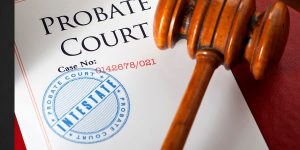
I’ve seen it happen more times than I can count. A family in Staten Island loses a parent, and in their grief, they discover there was no will. Suddenly, their future isn’t in their hands—it’s in the hands of a Surrogate’s Court judge who must follow a rigid, one-size-fits-all state formula. The assets are frozen, the process is public, and the outcome often creates the very friction the parent would have spent a lifetime trying to avoid.
A Last Will and Testament is the foundational document of legacy stewardship. It’s not about morbidly planning for an end; it’s about prudently planning for your family’s beginning—the one that starts after you are gone. It is your final instruction, your direct communication to the court and to your family about how you want your affairs handled.
The Will as a Statement of Intent
Many people view a will as a simple list of who gets what. In my practice, I see it as something much more profound. It is a formal declaration of your intentions, carrying the full weight of New York law. It serves three critical functions.
First, it names your executor. This is the person—or institution—you entrust with the fiduciary duty to gather your assets, pay your final debts, and distribute what remains according to your wishes. Choosing an executor is one of the most important decisions you will make. This person must be organized, impartial, and utterly trustworthy. Without your explicit choice, the court will appoint an administrator, who may not be the person you would have wanted in that role.
Second, a will provides clarity. Ambiguity is the enemy of a smooth estate administration. A properly drafted will leaves no room for interpretation, which significantly reduces the likelihood of disputes among heirs. When your wishes are in a legally binding document, it silences the noise of assumption and speculation.
The Default Plan: New York Intestacy Law
When a person dies without a will, they are considered to have died “intestate.” The state does not seize your property, but it does impose its own distribution plan. This plan is laid out in the Estates, Powers and Trusts Law (EPTL), and it rarely aligns perfectly with a family’s unique dynamics or needs.
For example, under current intestacy law, if you pass away with a spouse and children, your spouse does not automatically inherit everything. Instead, they receive the first $50,000 and one-half of the remaining estate. Your children inherit the other half. For many families, this could force the sale of a family home or other assets just to satisfy the children’s share—a result most people would never intend.
Dying intestate surrenders your authority. You give up the right to leave specific heirlooms to a particular child, to provide for an unmarried partner, or to make a gift to a charity that meant something to you. The state’s plan is impersonal and purely mathematical. A will is your opportunity to override that default and make deliberate choices.
Guardianship: Protecting Your Minor Children
For my clients with young children, the most important function of a will has nothing to do with money. It is the only legal document where you can nominate a guardian to care for your children if both parents pass away. Without this nomination, a judge who does not know you or your family will be forced to make this deeply personal decision.
The court will do its best, but it cannot know your values, your parenting style, or the subtle relationships between your children and your potential caregivers. Nominating a guardian in your will is a profound act of parental responsibility. It ensures the person you trust most will be the one to raise your children, providing them with stability and love during an unimaginably difficult time.
The Formalities That Give a Will Its Power
A will is not just any signed paper. To be valid in New York, it must be executed with specific formalities. As outlined in EPTL § 3-2.1, the will must be in writing, signed at the end by the testator, and witnessed by at least two individuals. These witnesses must sign within a 30-day period and should not be beneficiaries in the will, which prevents any appearance of undue influence.
These rules may seem strict, but they exist for a critical reason: to protect the testator and the integrity of their final wishes. The formal signing ceremony confirms that the person making the will was competent and acting of their own free will. When we supervise a will execution at our firm, we are creating a clear record that will stand up to scrutiny in Surrogate’s Court, ensuring your plan is honored.
A will is the first step in responsible estate planning. It’s the tool that replaces the state’s assumptions with your own intentionality. It protects, it provides, and it preserves a family’s harmony when they need it most.
If you have an existing will that has not been reviewed in the last three to five years, or if your family circumstances have changed, your document may no longer reflect your wishes. The first step is to schedule a session to review your current documents against your family’s present and future needs.